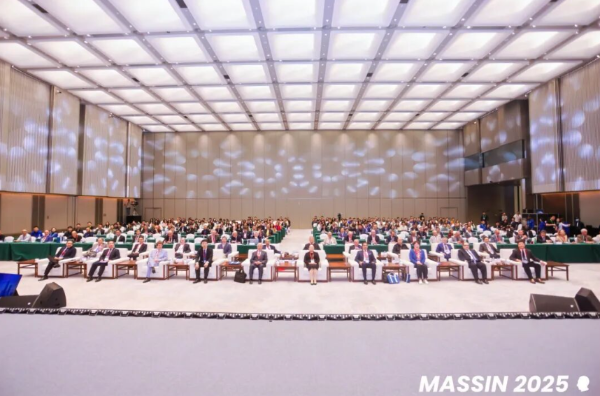
From November 13 to 16, 2025, the 5th Madjid Samii Society of International Neurosurgery (MASSIN) Interim Meeting was held at the Shenzhen Qianhai International Conference Center. The meeting was organized by China Medical Foundation and co-organized by Xuanwu Hospital Capital Medical University, the China International Neuroscience Institute (China-INI), the Hannover International Neuroscience Institute, Germany, and The Fourth People's Hospital of Shenzhen (Shenzhen Samii Medical Center). This high-level, informative and engaging international academic event attracted 600 neurosurgeons, including nearly 60 international experts and 100 Chinese experts from 24 countries and regions.
The distinguished guests attending the meeting included Ms. WU Hongyan, Secretary of the Leading Party Members Group and Director General of the Shenzhen Municipal Health Commission, Mr. LI Chuang, Deputy Director General of the Shenzhen Municipal Health Commission, Prof. Madjid Samii, President of Hannover International Neuroscience Institute, Germany, Prof. Amir Samii, Vice President of Hannover International Neuroscience Institute, Germany, Prof. LING Feng, Chief Expert of Neurosurgery Department of Xuanwu Hospital Capital Medical University, Prof. Ricardo Ramina (Brazil), Chair of Madjid Samii Society of International Neurosurgery, Prof. ZHANG Hongqi, Head of Neurosurgery Department of Xuanwu Hospital Capital Medical University, Dr. Mostafa Ghaffari, Senior Management Consultant of The Fourth People's Hospital of Shenzhen (Shenzhen Samii Medical Center), CPC Secretary WANG Cheng and Hospital Director Dr. Ethan Kholdebarin of The Fourth People's Hospital of Shenzhen.
01
Shenzhen opens a fresh chapter in neurosurgery.
On the morning of November 14, the opening ceremony of MASSIN2025 took place at the Shenzhen Qianhai International Conference Center. The sessions buzzed with a vibrant academic vibe, with most experts and scholars engaging in discussions and exchanging ideas entirely in English, fully demonstrating the event's international and professional standard. Before the sessions began, all attendees watched a short English documentary about Shenzhen, following the footage to revisit the city’s remarkable transformation from a small fishing village to a global metropolis, deeply experiencing its innovative vitality and the charm of the times.

Prof. Amir Samii, Chair of MASSIN 2025, Vice President of Hannover International Neuroscience Institute (INI), Germany, delivered the opening speech. He began by extending a warm welcome to all attendees on behalf of MASSIN. He warmly reflected on the core guiding principles championed by his father —education, the passing on of knowledge, and the striving for excellence. He emphasized that MASSIN is not only an academic platform, but a global community of neurosurgeons, and that Shenzhen, with its dynamic vitality, is the best place to explore the future of neurosurgery.

The Co-chair, Prof. ZHANG Hongqi, Head of Neurosurgery Department of Xuanwu Hospital Capital Medical University, reflected on the strong and longstanding friendship between MASSIN society and the Chinese neurosurgical community, as well as the positive impact previous MASSIN meetings have had on helping the neurosurgery specialty in China go global. He noted that holding this year's MASSIN meeting in Shenzhen symbolizes China’s strong determination to uphold openness and cooperation, and to integrate itself into the global innovation network in neurosurgery field. He also expressed hope that the meeting would further integrate international frontier ideas with China’s clinical practices.
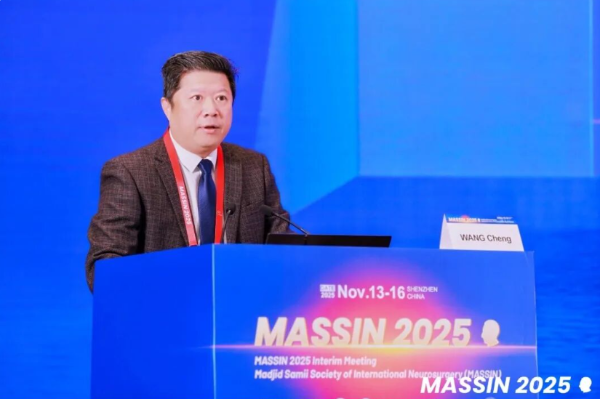
The MASSIN 2025 Secretary, Prof. WANG Cheng, CPC Secretary of the Fourth People's Hospital of Shenzhen (Shenzhen Samii Medical Center), delivered a speech as the host representative. He extended a warm welcome to all the guests who had traveled from afar, and gave a brief introduction to Shenzhen Samii Medical Center as a model of Sino-German collaboration, emphasizing its accomplishments and mission in the field of neurosurgery. He expressed that all hospital staff were honored to host this prestigious event and would do their utmost to ensure the successful progress of the meeting, providing the best environment for global neurosurgeons to exchange ideas.

Prof. Ricardo Ramina, President of MASSIN Society from Brazil, introduced the founding process of MASSIN and provided an overview of past meetings. He praised the meeting planning and academic agenda, emphasizing the irreplaceable role of cross-border, cross-cultural academic exchanges in pushing forward the highly specialized field of neurosurgery in today’s world.
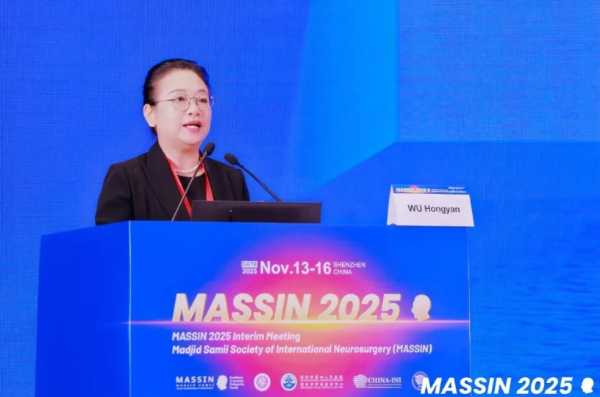
Ms. WU Hongyan, Secretary of the Leading Party Members Group and Director General of the Shenzhen Municipal Health Commission, extended her congratulations on behalf of the Commission for the successful convening of the meeting. She pointed out that as China’s "Silicon Valley of Technology" and a special economic zone, Shenzhen has always regarded the life and health industry as one of the key pillars for its future growth. She emphasized that the successful hosting of this high-level international medical meeting marks an important milestone in Shenzhen's goal of becoming an international medical center and attracting global high-end medical resources. She sincerely invited international experts to engage in deeper cooperation with Shenzhen in the future, with the aim of making Shenzhen a high-level center for innovation in neurosurgical technology.
With the joint witness of all attendees, the guest representatives pressed the launch button, officially marking the opening of MASSIN 2025.
02
Exchange of ideas sparks new insights, while the sharing of knowledge fosters mutual understanding.
The meeting brought global discussions and exchanges, making international dialogue accessible without the need to travel abroad. It attracted nearly 60 world-renowned neurosurgeons from 24 countries and regions across all five continents, including Prof. Madjid Samii (Germany), Ricardo Ramina (Brazil), Helmut Bertalanffy (Germany), Giovanni Broggi (Italy), Atul Goel (India), Ugur Ture (Turkey), Eduard Zverina (Czech Republic), as well as top experts from France, Japan, Bulgaria, Hungary, and other countries. At the same time, the meeting also brought together nearly 100 leading figures and key professionals from China’s neurosurgery field. With nearly 600 neurosurgeons, scholars, and professionals from home and abroad in attendance, the meeting reflected the growing openness and confidence of China’s neurosurgery community on the global stage.
From November 14 to 16, the meeting featured a packed schedule of academic sessions, discussions, and presentations, where both domestic and international experts engaged in deep exchanges on neurosurgical practices and technological innovations. The "Vascular Session" provided an in-depth exploration of hot topics such as brainstem cavernous malformations, complex intracranial aneurysm bypass surgeries, and interventional procedures. The "Skull Base Surgery Session" focused on advancements and innovations in surgical approaches, such as the extended retro-sigmoid approach and the resection of tumors in the jugular foramen region. The "Tumor Session" covered the entire spectrum from gliomas and meningiomas to pituitary tumors and vestibular schwannoma, with intense debates on the evolution of the "localized" tumor concept and individualized treatment strategies. Besides, the "Spine Session," "Session on Surgical Treatments of Intractable Epilepsy in Children," and "Pituitary Tumor Session" brought forward a wealth of the latest clinical research findings and shared insightful case studies.


Prof. BAO Shengde of Peking University First Hospital and Prof. ZHANG Xiang of Xijing Hospital of Air Force Medical University attended as honored guests.
The "Special Technology Session" provided valuable insights into future developments in the field. Experts from across the globe presented lectures and engaged in discussions on groundbreaking technologies, including neurosurgical robots, intraoperative magnetic resonance imaging, and brain-machine interface technologies. These presentations went beyond just introducing the technologies; they deeply explored how these technologies change the way surgeries are performed and push the limits of what treatments are possible, affect the ways in which these technologies are implemented in resource-limited areas, sparking philosophical reflections on the multifaceted challenges and issues that arise in a world increasingly shaped by technology.
The meeting not only continued its commitment to the global public welfare mission but also specifically focused on the "Africa 100 Program" as a key session, which was warmly received and stood out as a meaningful and uplifting part of the meeting. Prof. Abdeslam El Khamlichi from Morocco and Prof. Mahmood Qureshi from Kenya shared Prof. Madjid Samii's enduring contributions to the development of neurosurgery in Africa, as well as the crucial role of international collaboration in strengthening neurosurgical expertise in Sub-Saharan Africa. Prof. LING Feng also emphasized China's role in training neurosurgeons in Africa. This session went beyond just technical exchange, reflecting the commitment of the Chinese neurosurgical community as a responsible global contributor. It highlighted their active involvement in the noble cause of helping developing countries enhance their healthcare standards, earning widespread respect and admiration from the international community.
During the event, Prof. Madjid Samii and CPC Secretary WANG Cheng were respectively interviewed by the media, sharing their perspectives on the core mission of MASSIN, the strategic planning of nurospecialties in Shenzhen, and the vision for future development.
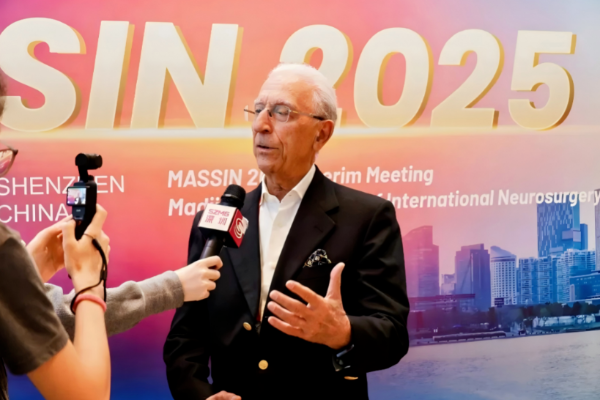
Prof.Madjid Samii envisions Shenzhen becoming an essential and recognized center in the global field of neurosurgery.
When discussing why the meeting was held in Shenzhen, Prof.Madjid Samii mentioned that it was partly due to the sincere invitation from the Shenzhen municipal government, and partly because of his many years of deep involvement in the city's healthcare development. As an honorary citizen of Shenzhen, he hopes that MASSIN 2025 will serve as an international platform to demonstrate Shenzhen's strength and potential in neurosurgery field to a wider audience of global neurosurgeons.
Looking ahead, Prof. Madjid Samii expressed his vision to build a first-class neurosurgery platform at The Fourth People's Hospital of Shenzhen, one that not only provides high-quality medical services but also actively promotes talent development and scientific innovation. In his vision, within the next decade, The Fourth People's Hospital of Shenzhen is expected to become one of the leading neurosurgery centers worldwide, establishing Shenzhen as a central center in the global neurosurgery network.
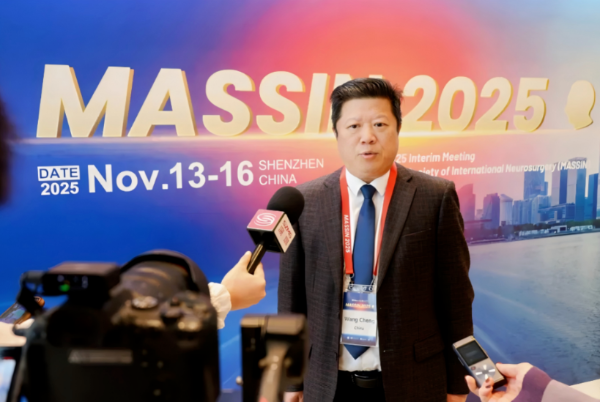
CPC Secretary Wang Cheng: Promoting development through "three key pillars”
In his interview, CPC Secretary WANG Cheng provided a comprehensive overview of the development strategy for the neurosurgery field in Shenzhen, exploring it from three key perspectives: the city, the hospital, and the specialty. He emphasized that The Fourth People's Hospital of Shenzhen has been tasked with the important mission of becoming a leading neurosurgery center. The focus should be on three key areas: developing a specialized cluster, cultivating young talent, and driving innovation through the integration of medicine and engineering, all aimed at enhancing neurosurgical diagnosis and treatment capabilities in Shenzhen and the Greater Bay Area.
Regarding MASSIN 2025, CPC Secretary WANG Cheng stated that this meeting provides a high-quality platform for young neurosurgeons from home and abroad to exchange ideas, while also serving as a key opportunity to evaluate the progress of the hospital’s specialty development and expand its international cooperation network. Looking ahead, with support from departments at various levels, the hospital aims to translate the new ideas and technologies brought by the meeting into tangible improvements in medical quality and patient outcomes.
03
Shine with brilliance in the academic field
MASSIN2025 brought together the leading experts from the global neurosurgery community, and as a co-organizer of the event and a key contributor to the development of neurosurgery in Shenzhen, the Fourth People's Hospital of Shenzhen stood out with its unique specialized expertise.
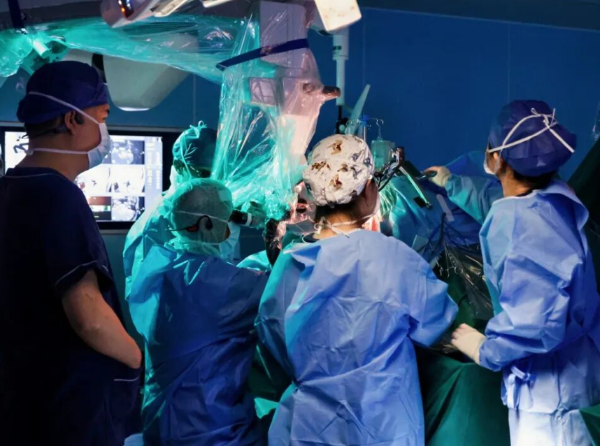
Early in November 13, the hospital demonstrated the seamless integration of cutting-edge international surgical techniques with its high-quality clinical platform, combining clinical practice with academic teaching. Prof. Madjid Samii successfully performed surgeries on two patients with Vestibular Schwannoma in the Hybrid Operating Room exclusively for neurosurgery, at The Fourth People’s Hospital of Shenzhen, featuring live surgeries & video presentations.
The hospital's participating team actively fulfilled its responsibilities as a co-organizer, while also participating in the tightly scheduled academic sessions with academic contributions. Several experts delivered lectures on topics such as the hospital development, specialty planning, and clinical techniques, demonstrating the hospital's and Shenzhen's broader efforts and strengths in the exploration of neurosurgery.

In a keynote lecture delivered entirely in English, CPC Secretary WANG Cheng presented the overall development of the hospital, especially the achievements of Hybrid Operating Room exclusively for neurosurgery, covering the patient safety-centered design principles, space planning that emphasizes humanistic care, the configuration of cutting-edge international equipment of international standard, and clinical application outcomes. He also mentioned that the "Vestibular Schwannoma Program of the Samii Skull Base Surgery Center”was officially launched in August this year. This project will bring greater health benefits to patients and provide strong support for the precise diagnosis and treatment of related conditions.

Prof.BAO Yuhai chaired the academic sessions and delivered a lecture in English. He emphasized that the key to brainstem cavernous malformation surgery is the precise localization of the lesion, a deep understanding of the brainstem's functional anatomy, selecting the safest minimally invasive approach, and performing the safest possible resection with minimal surgical impact, all conducted through neurophysiological monitoring. This approach maximizes the preservation of neurological function and optimizes surgical outcomes for patients in this high-risk area.
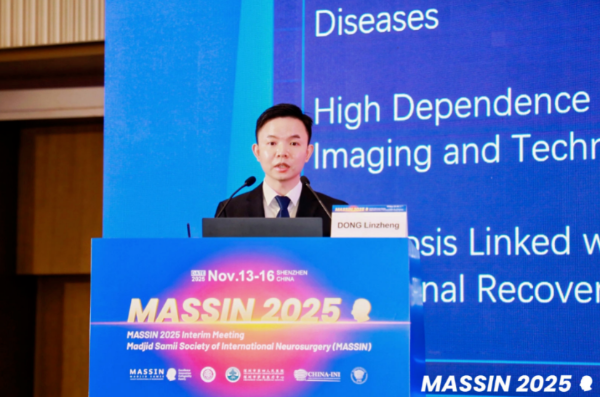
Dr. DONG Linzheng shared that robotic technology is profoundly transforming neurosurgery. With submillimeter precision, the establishment of stable minimally invasive access, multimodal imaging techniques, and standardized procedural execution, it is making deep, complex, and high-risk surgeries safer, more efficient, and more controllable. From LITT precision ablation, SEEG and DBS electrode implantation, to hematoma puncture drainage and complex skull base pathway planning, robotics is significantly enhancing the precision and intelligence of neurosurgery. In the future, with the support of AI, robotic technology will further enhance its capabilities and performance.

Staff from various departments of the hospital volunteered to participate in the meeting preparation and on-site support, providing professional and detail-oriented services in aspects such as guest reception, guest venue guidance, translation coordination, and document consolidation. Their efforts laid a solid foundation for the event to run smoothly and orderly.
It is worth mentioning that the simultaneous interpretation team from Xuanwu Hospital Capital Medical University provided interpretation services for the meeting, ensuring the smooth progress of the event. In addition, the wife of SUN Dayong, Head of the Emergency Department, volunteered to assist in planning and organizing the cultural performance, which was brilliantly presented at the gala dinner. The program combined rich cultural heritage with a broad international perspective, and included an interactive part that strengthened Sino-foreign friendship. It brought a warm and welcoming atmosphere to the tightly scheduled academic exchanges, making cross-cultural communication more meaningful and personal.
04
Experiencing Shenzhen personally, feeling its dynamic vitality, and gaining a deeper appreciation of what the city represents.
During the event, MASSIN2025 also thoughtfully arranged a study tour to destinations that demonstrate what makes Shenzhen unique.
On the afternoon of November 13, the expert group toured the BYD Exhibition Hall to learn directly about Shenzhen's achievements in smart manufacturing, new energy, and automation.
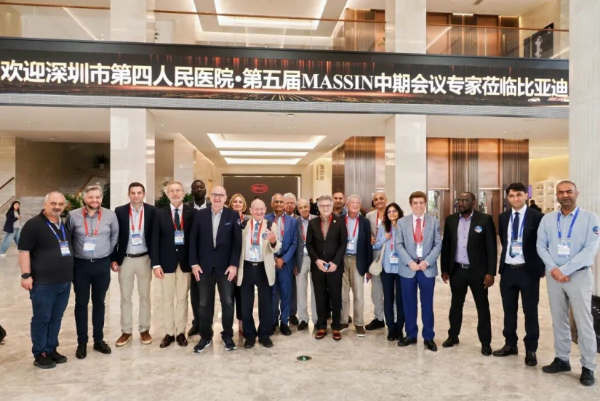
While innovation is crucial for medical progress, technological breakthroughs should ultimately focus on enhancing human well-being and meeting the needs of individuals. From neurosurgical navigation systems to brain function imaging technology, from AI-assisted diagnosis to surgical robots, each technological breakthrough opens new possibilities for medicine.
On November 14 and 15, the expert group was split into two groups to visit the Shenzhen-Zhongshan link, a key transportation project in the Guangdong-Hong Kong-Macau Greater Bay Area. They had the chance to experience this "maritime corridor" up close. During the visit, the experts listened attentively to staff presentations on the project’s planning, technical challenges, and other details, gaining a more direct understanding of Shenzhen’s vital role in infrastructure development and regional collaborative growth.
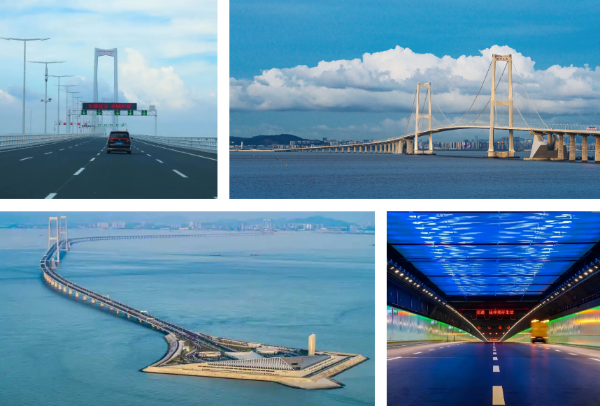
After crossing the Shenzhen-Zhongshan Link, the expert group went directly to the Sun Yat-sen Museum. Guided by the displayed artifacts and historical documents, they reflected on the key moments in modern China's history, from national awakening to the exploration of the path to modernization.
On November 15, CPC Secretary WANG Cheng guided the expert group through the exhibition celebrating the 40th anniversary of the Shenzhen Special Economic Zone. The exhibition, featuring photos, artifacts, videos, and interactive multimedia, offered a comprehensive view of Shenzhen's transformation from a fishing village to an international metropolis. The experts frequently paused to engage in discussions, noting that Shenzhen's bold, innovative, and open-minded spirit has also provided fertile ground for the development of high-level specialties and the innovation for medical-engineering integration.

The experts unanimously expressed that these "outdoor" excursions gave them a deeper, multi-faceted understanding of Shenzhen, beyond the academic discussions at the meeting.
While academic debates fuel new ideas, the warm-hearted discussions that transcends borders make the exchanges more meaningful and profound. Amid the busy schedule, this international event also revealed a heartwarming side story beyond the academic exchanges.
Prof. Loránd Erőss from Hungary, accompanied by Deputy Hospital Director YU Ping of The Fourth People's Hospital of Shenzhen, made a special visit to the Theater of Nanshan Cultural and Sports Center. For him, the theatre is not just a city landmark but a deeply emotional memory of father and son. His father had been a key member of the team that designed the theatre. Now, as he walks into the building, he is retracing his father's steps, experiencing the unique craftsmanship his father left behind in Shenzhen.
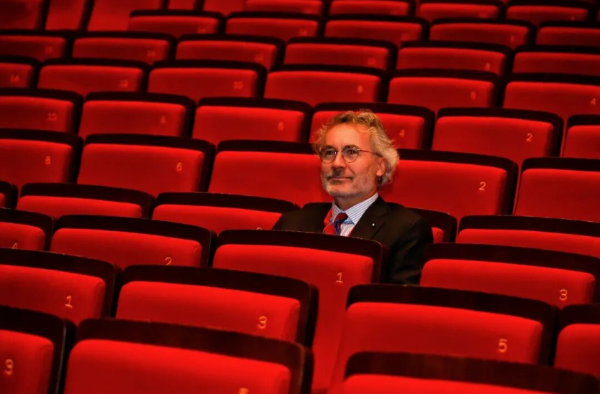
Prof. Erőss asked the photographer to capture the moment of him sitting alone in the audience seats.
In that moment, he felt a profound emotional connection with his father, as if they were communicating across time and space, despite his father's absence.
The MASSIN 2025 marks another important milestone in the history of international neurosurgery development. It not only provided a high-level academic exchange platform for global neurosurgeons and scholars but also further promoted deep cooperation between China and foreign countries in areas such as neurosurgical technology, education, and research.
This grand event also provided an opportunity for the hospital to present itself to a global audience, demonstrating its strengths and reputation. CPC Secretary WANG Cheng delivered the opening speech and a keynote lecture entirely in English; Prof. BAO Yuhai from the Neurosurgery Department chaired academic sessions and delivered a lecture in English; Dr. DONG Linzheng presented an academic lecture in his area of expertise; all attending hospital staff actively participated in academic discussions, absorbing cutting-edge ideas; and some staff volunteered to coordinate and support the event, ensuring the event progresses in an organized and orderly manner. This fully demonstrated the hospital’s strength in its specialties and its comprehensive capabilities.
The MASSIN 2026 will be held in May of next year in Mumbai, India. This academic exchanges of experts from all around the world will continue to connect global peers and contribute to writing a new chapter in the collaborative development of neurosurgery.
Copyright © 2018 SHENZHEN SAMII MEDICAL CENTER 粤ICP备19008291号


Official WeChat Service Account